1800 960 919
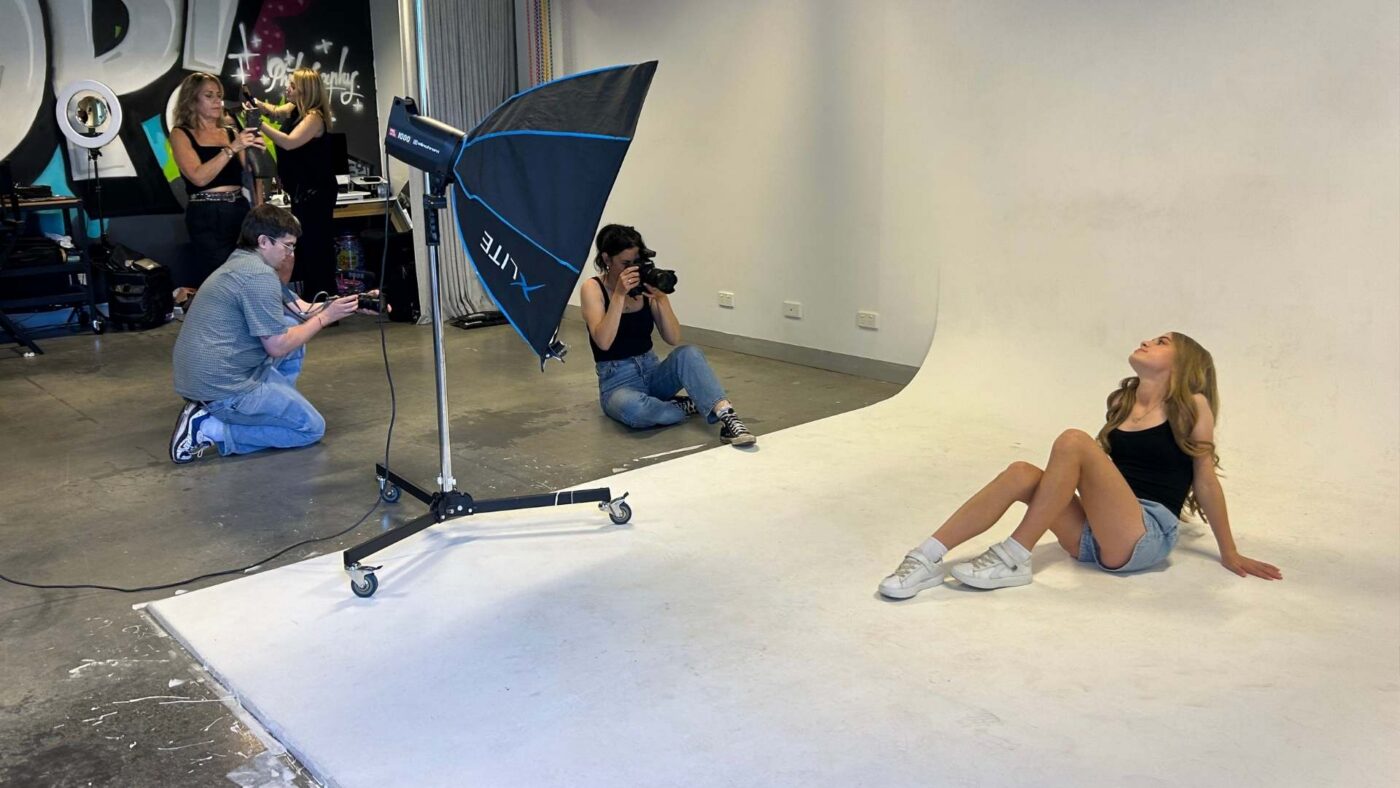
Walking into your first professional photoshoot can feel a bit like stepping onto a stage without a script. Your hands suddenly feel enormous, your smile looks borrowed, and you’re wondering where on earth your elbows are supposed to go. We get it — after photographing thousands of first-timers across our Melbourne, Sydney and Brisbane studios, we’ve seen every nervous shuffle in the book.
The good news? You don’t need modelling experience to nail a shoot. You just need a handful of easy model poses that work on almost any body type, in almost any outfit, under almost any lighting setup. This guide breaks down the exact poses our POP photographers coach clients through every single day — the ones that consistently land in magazines and portfolios.

Why Do Model Poses Matter?
Posing is the difference between a snapshot and a photograph worth framing. A camera flattens three-dimensional bodies into two dimensions, and without intentional posing, even the most beautiful person can end up looking stiff, awkward or wider than they are in real life. Good posing shapes the body, directs the viewer’s eye, and communicates personality in a single frame.
There’s also a confidence component. When you know what to do with your hands, your weight, and your chin, you stop thinking about the camera and start enjoying the shoot. That shift — from self-conscious to self-assured — is usually the moment our photographers know they’ve got “the shot”. It’s also why we spend the first ten minutes of every Signature Photoshoot session running through warm-up poses before we even touch the shutter.
What Makes a Good Model Pose?
A strong pose does three things at once: it creates shape, it creates space, and it tells a story. Shape comes from angles — a bent elbow, a tilted hip, a slightly turned shoulder — because straight lines read as stiff on camera. Space means avoiding the dreaded “mashed limb” effect, where arms stick to the torso and hands disappear into pockets, making everything look bulkier than it is.
Story is the subtler piece. Are you laughing mid-conversation? Lost in thought? Caught mid-stride? The best poses feel like a frozen second from a longer moment, not a held breath. If you scroll through our gallery, you’ll notice the standout shots all have that lived-in quality — nobody looks like they’re holding still for the camera.

How Do You Find Your Best Angles?
Every face has a “good side”, and finding yours is easier than you think. Stand in front of a mirror and slowly turn your head left to right, pausing every few degrees. Most people have one side where the cheekbone catches light more flatteringly, the jawline looks sharper, and the eye appears slightly larger. That’s your hero side, and once you know it, you can consciously favour it during a shoot.
For the body, the universal rule is the three-quarter turn. Instead of facing the camera square-on, angle your body about 45 degrees away and bring your front shoulder slightly forward. This instantly slims the waist, elongates the torso, and adds that magazine-editorial dimension. Our photographers will always guide you into this if you forget, but knowing it walking in saves time and gets you better frames faster.
What Are the Most Common Posing Mistakes?
The number one mistake we see at POP is tension — clenched jaws, locked knees, rigid shoulders pulled up near the ears. Tension photographs poorly because it reads as discomfort, and no amount of retouching can fix a frightened smile. The fix is a quick shake-out between setups: drop your shoulders, wiggle your fingers, unclench your jaw, and take a deep breath before the next frame.
The second mistake is the “claw hand” — fingers splayed stiffly or curled into fists. Hands are surprisingly expressive, and they need almost as much direction as the face. Other frequent slip-ups include leaning back (which creates a double chin on camera), tucking the chin too low, and forgetting to breathe. If you ever feel lost mid-shoot, your photographer will reset you — that’s literally what we’re here for.
1. The Confident Stand

This is the foundation pose every shoot starts with. Plant one foot slightly in front of the other, shift about 70 per cent of your weight onto the back leg, and let the front knee bend naturally. It creates an instant S-curve through the body and works brilliantly for fashion, corporate and portrait shots alike. Avoid planting both feet flat and square — that’s a passport photo, not a portfolio shot.
2. The Over-the-Shoulder Glance

Turn your back three-quarters to the camera, then rotate your head to look over your leading shoulder. This pose shows off the jawline, neck, and collarbones while creating a sense of mystery and movement. The trick is to keep the chin slightly down and the eyes slightly up — dropping the chin too far creates shadows under the eyes that nobody wants.
3. Hand on Hip

A classic for a reason. Place one hand lightly on your hip with fingers relaxed (not gripping), and let the other arm fall naturally at your side or hold a prop. The bent elbow creates that essential negative space between arm and body, which is what makes the waist look defined. Keep the hand soft — a white-knuckled grip screams nerves every single time.
4. Walking Towards Camera

Movement poses are a secret weapon for beginners because they stop you overthinking. Walk slowly towards the photographer as if you’re strolling down a quiet street, letting your arms swing naturally and your eyes drift up at the last second. The motion loosens your whole body and produces candid-feeling frames that rarely look staged.
5. The Sitting Lean

Perch on a stool, box, or the edge of a chair, and lean your forearms onto your thighs with your back angled slightly forward. This pose works wonders because it naturally relaxes the shoulders, lengthens the neck, and gives your hands something obvious to do. Keep your knees slightly apart rather than pressed together — pressed knees look tense and unnatural on camera.
6. Looking Away

Not every great photo requires eye contact with the lens. Softening your gaze and looking just past the camera, or out a window, creates an introspective, editorial mood that magazines love. Pick a specific point to look at rather than staring into space — a random focal point keeps the eyes alive and prevents that glassy, faraway expression.
7. Hair Touch

Running a hand lightly through your hair is the ultimate “what do I do with my hands?” rescue pose. Keep your fingers loose and your wrist soft — the goal is a gentle sweep, not a grip. This pose photographs beautifully because it draws attention to the face while adding motion and softness. Works for any hair length, even cropped styles, where you can rest fingertips at the temple instead.
8. Arms Crossed
Done wrong, crossed arms look defensive. Done right, they look powerful and polished. The key is to cross low — around the waist, not the chest — with hands relaxed rather than gripping elbows. Tilt your chin up slightly and shift your weight onto one hip to keep the energy open instead of closed off. This is a go-to for corporate headshots and editorial covers.
9. Profile View

Turn completely side-on to the camera, square your shoulders, and look straight ahead. A pure profile is dramatic, architectural, and wonderfully forgiving because it highlights bone structure. Lengthen your neck as if a string is pulling the top of your head upward, and keep the mouth relaxed. This is a pose our studio photographers love for black-and-white frames.
10. Laughing Naturally

The best shot of the day is almost always a genuine laugh. Forced smiles photograph as grimaces, so instead of trying to laugh on cue, think of something actually funny — a terrible joke, an inside memory, your photographer’s dad humour (we specialise in it). The pose itself is simple: head tilted slightly back, eyes soft, teeth visible but not clenched. It’s the easiest pose on this list because it requires no mechanics at all, just a moment of real joy.
How Many Poses Do You Get in a Professional Shoot?
A typical professional studio session captures between 200 and 500 individual frames across roughly 15 to 25 distinct poses and outfit variations. At POP, our $99 Signature Photoshoot walks you through multiple backgrounds, outfit changes, and pose setups with a professional photographer guiding every frame. For clients wanting the full magazine-editorial experience, our $249 Star for a Day package includes professional hair and makeup by H&M-trained artists, plus a publication guarantee through our media partners.
Out of those hundreds of frames, you’ll typically receive a curated selection of the strongest shots — the ones where pose, expression, lighting and styling all aligned. That’s the whole reason studios exist: to maximise the hit rate so you walk out with images you’re genuinely proud of. Explore our full range of packages on the services page.
Frequently Asked Questions About Modelling Photoshoots
Do I need modelling experience to book a professional photoshoot?
Not at all. The vast majority of our clients have never stepped in front of a professional camera before, and our photographers are trained specifically to coach first-timers through every pose, expression and angle. You’ll be guided from the moment you walk in — no prior experience required.
How should I practise posing before my shoot?
Spend ten minutes in front of a full-length mirror trying the ten poses above. Focus on how each one feels rather than how it looks — muscle memory is what carries you through on shoot day. Taking a few phone selfies in natural light can also help you identify your best angles before you arrive.
What should I wear to show off these poses?
Fitted but comfortable clothing works best. Garments with defined waistlines highlight the shape-creating benefits of poses like Hand on Hip and the Confident Stand, while solid colours photograph cleaner than busy patterns. Avoid anything so tight it restricts movement — you need to be able to walk, sit and turn freely.
Will the photographer tell me what to do on the day?
Absolutely, every single frame. Our POP photographers coach you through every pose, adjusting your chin, hands, weight and expression in real time. Think of it less like modelling and more like a guided dance — you just have to show up and follow along.
How long does a studio session usually take?
A Signature session runs for around 90 minutes from arrival to final frame, including a styling consultation and multiple pose setups. The Star for a Day experience runs longer at roughly three hours, since it includes professional hair and makeup before the shoot begins.
Can these poses work for family or group photos too?
Most of them translate beautifully to groups. The Confident Stand, Sitting Lean, and Laughing Naturally are particularly effective for couples, siblings and family portraits. Our sister studio Bubblegum Casting has been photographing kids and families since 1981, and our adult talent arm Hunter Talent works with clients across every age bracket — the fundamentals of good posing stay remarkably consistent regardless of who’s in the frame.
Ready to Put These Poses Into Practice?
Reading about poses will only take you so far — the real confidence comes from doing them under professional lights, with a photographer who knows exactly how to guide you. Whether you’re building a portfolio, updating your corporate headshots, or ticking a bucket-list experience off the list, our studios in Melbourne, Sydney and Brisbane are built for first-timers and seasoned subjects alike. Browse our gallery to see what’s possible, then book a session through our services page and turn these ten poses into photographs you’ll actually want to print.